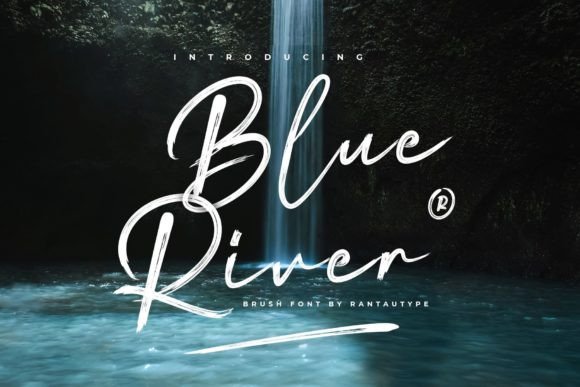
Blue River: A Brush Script Font for Makers and Shops
Last Tuesday, I sat down with a fresh sheet of kraft labels and a half-finished candle design. The scent was ready. The wax was perfect. The vessel looked beautiful. But something about the label felt incomplete. I had tried three different fonts already. One felt too stiff. Another felt too casual. The third just disappeared against the warm kraft background. Then I opened Blue River, typed out the candle name, and everything clicked. The label suddenly had a voice.
That moment happens more often than most makers expect. You can spend hours perfecting a product, only to realize that typography carries far more emotional weight than you gave it credit for. A font does not just spell words. It sets a mood, suggests quality, and tells your customer what kind of experience waits inside the box.
What Blue River Brings to the Craft Table
Blue River is a brush script font that leans into modern elegance without feeling fragile. The strokes are fluid and confident. Each letterform connects with a natural rhythm that mimics real hand lettering, yet the consistency across the character set keeps everything polished and professional. This is not a font that tries to look messy on purpose. It feels intentional, like someone who knows exactly how much pressure to apply to a brush tip.
The personality sits somewhere between upscale boutique and approachable handmade. It has enough movement and flourish to catch the eye on a shelf or in a listing image, but it does not overwhelm the product it describes. For makers who sell physical goods or digital downloads, that balance is everything. You want your text to enhance the item, not compete with it.
The included ligatures and swashes add another layer of versatility. Alternate characters let you customize the look of specific letter pairs, so the same word can feel slightly different depending on which glyphs you choose. This is especially useful when you are designing a product line where each variant needs its own subtle personality while staying visually cohesive.
A Font That Works Across Real Handmade Products
After that candle label experiment, I started testing Blue River on other product mockups. The results were surprisingly consistent across very different surfaces and substrates.
Candle Labels and Boutique Packaging
On candle labels, Blue River reads clearly at display sizes. The brush texture holds up well when printed on matte sticker paper, glossy vinyl, or even textured kraft. I found that setting the scent name or product title in Blue River and keeping the smaller ingredient text in a clean sans serif font created a layered, intentional look. The contrast between the flowing script and the grounded sans serif felt balanced and modern.
For boutique packaging, the font adds perceived value. When you wrap a handmade soap in tissue paper and seal it with a label that uses Blue River for the shop name, the entire presentation feels more considered. Even simple packaging suddenly looks like it belongs in a curated gift shop.
Wedding Invitations and Stationery
Wedding stationery is one of those categories where script fonts either shine or fall apart. Blue River holds up beautifully on invitation suites. The letterforms are decorative enough to feel romantic and celebratory, but the brush style keeps things from veering into overly formal calligraphy territory. This makes it equally suitable for rustic barn weddings, garden ceremonies, and modern minimalist celebrations.
On RSVP cards, place cards, and welcome signs, the font remains legible even at slightly smaller sizes. The key is to use it for names, headings, and key phrases rather than full paragraphs. A welcome sign that reads "Welcome to Our Beginning" in Blue River, paired with a simple serif font for the date and location details, creates instant visual hierarchy.
Printable Wall Art and Digital Downloads
For printable creators, Blue River opens up a wide range of design possibilities. The brush texture looks striking on quote prints, nursery name signs, kitchen art, and inspirational wall decor. When you export a print-ready file, the letterforms retain their character without pixelating or losing the delicate brush edge.
One of my favorite tests involved a simple "Gather Here with Grateful Hearts" print. I set the word "Gather" in Blue River at a larger size, then used a clean sans serif font for the rest of the quote. The contrast in scale and style made the single script word feel like a design feature rather than just text. This kind of pairing strategy works well for digital download shops that sell template-based prints.
Stickers, Tags, and Small Merchandise
Sticker design requires fonts that stay legible at small sizes. Blue River performs best on stickers and tags when used for short words or single names. Think "Handmade," "Thank You," or a customer name on a personalized label. At very small sizes, the finer brush details can become challenging for cutting machines to trace accurately, so I recommend testing a sample cut before committing to a large batch.
For hang tags, price tags, and garment labels, the font adds a personal touch that customers notice. A simple kraft tag that says "Made with Love" in Blue River communicates care without needing additional decoration. On fabric labels for sewn goods, the font translates well to woven or printed tags when sized appropriately.
Mugs, Shirts, and Tote Bags
Heat transfer vinyl and screen printing both present unique challenges for script fonts. Thin strokes can get lost. Thick strokes can feel heavy. Blue River strikes a middle ground. The brush strokes have enough weight variation to look natural, but the overall thickness stays consistent enough for clean weeding on vinyl projects.
On tote bags, a single word or short phrase across the center in Blue River creates a relaxed, effortless look. I tested a simple "Wildflowers" design on a canvas tote mockup, and the brush texture felt perfectly suited to the natural fabric. For shirts and mugs, the font works especially well for names, initials, and short inspirational words.
Production Tips for Makers Using Blue River
When you move from design mockup to actual production, a few practical considerations can save time and materials.
Readability at different sizes. Blue River is designed as a display font, which means it performs best at larger sizes for titles, names, headings, and decorative text. For product labels with small ingredient lists or care instructions, pair it with a legible sans serif font or a simple serif font. The combined look often elevates the entire design.
Cutting machine compatibility. For Cricut and Silhouette users, the brush texture and swashes require careful attention during the tracing process. Smooth the nodes where possible, and run a test cut on scrap material before committing to your final product material. Some of the finer swash details may need to be simplified for clean cutting results.
Print quality on various materials. When printing on textured paper, the brush texture of Blue River interacts with the paper surface in a pleasing way. On glossy materials, the strokes appear crisp and defined. For sticker sheets and product labels, a high-quality print setting preserves the subtle variations in stroke weight.
Mockup presentation for listings. Product photography and mockup images play a huge role in how customers perceive your items online. Using Blue River consistently across your listing images, shop banners, and social media graphics builds a cohesive visual identity. Potential buyers start to recognize your style before they even read your shop name.
Pairing Blue River with Other Typefaces
A good script font becomes even more useful when paired thoughtfully with complementary typefaces. Blue River works beautifully alongside clean sans serif fonts for a modern contrast. The structured simplicity of a sans serif helps ground the fluid movement of the brush strokes, creating a balanced composition that feels intentional and professional.
For a warmer, more traditional look, pairing Blue River with a simple serif font introduces a subtle classic elegance. This combination works wonderfully for wedding stationery, formal event invitations, and heritage-inspired branding projects. The serif anchors the design while the script adds personality.
When pairing Blue River with another script font or a handwritten font, exercise caution. Two decorative fonts can compete for attention and make the design feel cluttered. Usually, one expressive font per product is enough. Let Blue River carry the decorative weight and support it with quieter type choices.
Brand Consistency Across Your Product Line
One of the hidden benefits of choosing a versatile script font like Blue River is the ability to maintain visual consistency across an entire product catalog. Whether you sell candles, greeting cards, printable wall art, or custom apparel, using the same font family for your product names, titles, and decorative text creates a thread that ties everything together.
Customers may not consciously notice the consistent typography, but they will feel that your shop has a point of view. Over time, that recognition builds trust and makes your products more memorable. When a repeat buyer sees a new release from your shop, the familiar type style signals that this product belongs to the same collection they already love.
This kind of brand consistency does not require a formal logo or a complex brand identity system. Sometimes it starts with something as simple as a single font choice that you return to again and again because it just works.
Creative Possibilities Beyond the Expected
Beyond the obvious product applications, Blue River lends itself to some less expected uses. Seasonal craft designs benefit from the font's ability to shift tone depending on the context. A Halloween-themed printable feels slightly spooky with the right wording and color palette. The same font on a spring market flyer feels fresh and lively. The brush texture adapts to the mood you build around it.
Editorial design projects, such as DIY zines, recipe cards, and handmade booklets, also benefit from a display font with this much personality. Section headers and pull quotes set in Blue River create visual interest and break up long text passages without distracting from the content.
For makers who sell templates to other creators, including Blue River as a recommended font for titles and headings gives your customers an easy design win. They can open your template, type their own text, and immediately have a polished, professional-looking result without needing advanced typography skills.
Understanding What Is Included and Licensed
Before you start selling products that feature Blue River, take time to review the font files and the included commercial font license. Most premium fonts come with OpenType features like alternates, ligatures, and swashes that you access through your design software. Familiarize yourself with how to find and use these special characters so you can take full advantage of the typeface.
Check which file formats are provided, whether multilingual support is included, and what the license permits for physical product sales, digital downloads, and template distribution. Different font licenses cover different use cases, and understanding your rights protects both you and the type designer.
A commercial font license typically allows you to use the typeface on products you sell, but restrictions may apply to embedding the font files in editable templates or sharing them with clients. Read the terms carefully, especially if you plan to create SVG-style designs, printable templates, or merchandise that will be reproduced in large quantities.
For makers building a small business, a well-chosen font becomes a quiet design partner. It shows up on every label, every card, every mockup, and every social media post. Blue River brings that rare combination of expressive brush energy and polished modern typography that makes handmade products look professional without losing their personal, crafted feel.